How do I avoid lazy “Vikings were just raiders” writing?
“The Vikings arrive, raid a monastery, and sail away.” It is a familiar opening—and not necessarily a false one. Raiding was part of Viking-age life. The problem comes when it is the only thing Viking characters do, the only reason they travel, and the only detail a story knows about their world.
Better writing does not require turning every raider into a kindly merchant or giving the audience a lecture on medieval economics. It means showing a society with more than one gear: people who traded, farmed, crafted, settled, travelled and made alliances, as well as people who fought. A few well-chosen objects and scenes can make that breadth visible. The aim is not to cram in facts; it is to make the world feel inhabited.
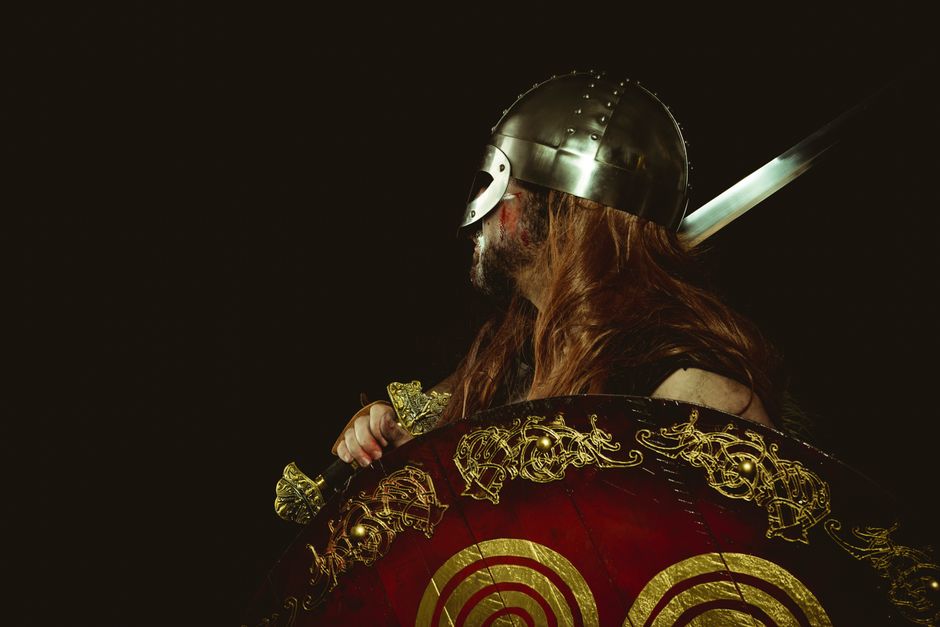
Whether you are writing a game review, a screen story or a short piece for a history-minded site such as HistoryMedieval, begin by asking what the audience can see beyond the weapons. Even a general reader—Mr Q, say, or a reader searching for MrQ—can follow a story’s historical texture when it is built from clear, concrete details rather than a string of unfamiliar terms.
Start with a visual vocabulary, not a stereotype
Visual shorthand is useful. A longship, a round shield and a timber hall can tell an audience quickly where it is. But shorthand becomes lazy when every image points to the same conclusion: these people exist to attack someone else. Treat ships, shields and settlements as parts of a working world, each with more than one story to tell.
Ships are transport, infrastructure and risk
A ship can carry raiders, but it can also carry families, tools, food, livestock and trade goods. Its shape suggests what a journey demands: a crew who know the water, someone responsible for supplies, repairs after hard use and decisions about when to travel. A vessel hauled ashore is not simply an action shot. It may need cleaning, patching, unloading and guarding. Those practical details give characters something to do before the plot asks them to fight.
Travel also connects communities. A journey might link a farm to a market, a settlement to a seasonal gathering, or a Scandinavian port to trading routes stretching across the North Sea and Baltic. Norse travellers reached and settled places including the British Isles, Iceland and Greenland; their movements brought them into contact with many different communities. A story need not map every route. One visiting trader, a borrowed word, or an unfamiliar object can imply a wider network.
Shields belong to people, not just battle scenes
Round shields are instantly recognisable, but they need not appear only in a line of warriors. A shield might be repaired, painted, stored, carried on a journey or passed between family members. Its condition can tell us something: is it freshly made, weather-worn, carefully maintained, or patched in a hurry? Use such details with restraint. A prop does not need an invented biography, but it can show that equipment takes labour and attention.
Settlements make daily life visible
A settlement is not a backdrop waiting to burn. Give it movement: smoke rising from cooking fires, animals being tended, a work area where metal or wood is being shaped, people bringing in loads, someone keeping an eye on stored food. The exact details will vary by place, period and season, so check them rather than treating every Viking-age community as identical. The key is to show that people have reasons to be there other than preparing for a raid.
Make trade specific enough to matter
“They traded” is an improvement on “they raided”, but it is still too abstract to create a scene. Name goods, show who handles them, and give the exchange a purpose. Viking-age trade could involve items such as wool, cloth, iron, furs, walrus ivory, glass beads and imported goods. The mix depended on region, date and route; do not assume every harbour held the same cargo or that every character could afford the most exotic object.
Trade can also make a story more interesting than a simple sale. A buyer may be waiting for a shipment; a craftsperson may need a particular material; a local leader may want to secure an agreement; a traveller historymedieval.com may be carrying news as well as goods. The exchange creates relationships and stakes. If a cargo is delayed, damaged or disputed, the tension can be as immediate as a threat of violence—and more revealing about the community involved.
Let the harbour do some of the storytelling
A harbour scene is an efficient way to establish contact and travel because it gathers different people, languages, goods and intentions in one place. It also gives the audience a physical sense of arrival. Instead of having a character announce, “This is a busy trading port,” let us see a vessel come in, a crew waiting for the right moment to land, and people already at work on the shore.
Think in layers. Near the water, there are practical tasks: securing a boat, unloading cargo, checking its contents and keeping goods out of the way of spray or mud. Beyond that, there may be a market, workshops, storage, animal pens or a path leading inland. People can be greeting relatives, bargaining, watching strangers or trying to get past one another with heavy loads. Sound matters too: water against hulls, shouted instructions, animals, hammers and the noise of a crowd.
These are prompts, not a universal checklist. A small landing place will not look like a large commercial centre, and the archaeological evidence varies from site to site. Choose details that suit your setting, season and scale. One well-observed harbour can suggest a whole map beyond the frame: where a ship came from, what it brought, and where it might go next.
Establish the setting at the speed of the medium
Games and films have different tools for orienting an audience. A film can establish place through a wide shot, a few carefully chosen sounds and an object in close-up. A game has to make the setting legible while the player moves, explores and makes decisions. In both cases, speed matters—but “quick” does not have to mean “generic.”
Medium What it can establish quickly A common pitfall A more useful choice Film or television Place, mood and social activity through framing, sound and performance Using a montage of ships and weapons as the whole introduction Pair a recognisable ship with a revealing everyday action, such as unloading or repairing it Games Space, routes and routines through exploration and interaction Making every settlement a combat arena or loot stop Give locations useful differences: a landing place, a workshop, a market or a meeting groundFor film, the first minutes can orient the viewer without pausing for exposition. A ship arriving at a settlement, followed by a close view of cargo being checked, establishes travel and trade in a few beats. A character’s reaction can show whether the visitors are expected, welcome or dangerous. The scene is doing plot work and historical world-building at once.
In a game, the player may spend longer in a location, but that time is only useful if the environment rewards attention. Let settlement layout communicate purpose. Show where people work, gather, store goods and approach the shore. A trader’s stall, a repair task or a conversation about a distant route can make the world feel connected. If every building contains a hostile guard or a chest, players quickly learn that the settlement is scenery for the next fight.
Use the horned helmet as a clue to your own assumptions
The horned Viking helmet persists because it is instantly readable. It is dramatic, easy to reproduce in a drawing or costume, and has been reinforced by popular entertainment and stage imagery. It also gives a character a striking outline. But there is no good evidence that horned helmets were standard Viking-age battle gear. Putting one on a Viking warrior as though it were ordinary kit is a shortcut borrowed from later imagination, not a reliable historical detail.
That does not mean horns can never appear in a story about the past. Art and costume can take creative liberties, and a story may deliberately use familiar imagery. The important thing is to know when you are choosing a symbol rather than depicting everyday equipment. If accuracy is the aim, ask what the helmet tells the audience—and whether it tells them something misleading.
Let the Gjermundbu helmet reset the picture
The Gjermundbu helmet is a useful reality check. Found in a tenth-century burial in Norway, it is the only near-complete Viking-age helmet currently known. It is made of iron and includes a distinctive spectacle-like face guard. Its form is practical and recognisable without horns. The find does not prove that all Viking helmets looked the same; the survival of archaeological material is uneven, and helmets were not necessarily common possessions. It does, however, offer a solid alternative to the horned cartoon.
When writing a scene, use that evidence as a starting point rather than a licence to make every character wear an identical museum object. Consider who can afford a helmet, what other protection they might use, and whether the scene actually needs one. A detail becomes more convincing when it reflects a character’s circumstances instead of functioning as a costume label that says “Viking”.
Give the audience more than one kind of Viking
Variety should not become a new stereotype in which every Viking is a merchant, farmer or peaceful explorer. People within a society have different roles, resources and motives. Some may fight; others may support a journey, negotiate an exchange, maintain equipment or stay home to manage the work that makes travel possible. A character can occupy several roles over a lifetime—or even over the course of one story.

Try building scenes from a mix of motives:
- A crew is preparing for a voyage, and its members disagree over what cargo to take.
- A craftsperson needs imported material and must decide what to offer in exchange.
- A returning traveller brings news, but the people waiting on shore care more about a missing person than a distant king.
- A settlement hosts visitors whose presence is useful, unsettling or both.
- A raid has consequences for the raiders as well as the people they attack: injury, lost equipment, retaliation or a damaged relationship.
These prompts do not soften violence. They place it within a society that has more going on than violence. That makes conflict sharper, because the audience understands what may be lost.
A quick revision checklist
- Check the verbs. Do your Viking characters only raid, fight and sail? Add actions that show work, exchange, care, negotiation or travel.
- Make trade tangible. Include a plausible good, a person handling it and a reason the exchange matters.
- Show contact. A visitor, route, borrowed object or conversation can reveal a world beyond the settlement.
- Use the harbour. Think about arrival, unloading, repair, noise, weather and the route inland—but select details suited to your place.
- Match the medium. Use framing and sound in film; use navigable space and meaningful interactions in games.
- Question the costume shorthand. If a horned helmet appears, make sure it is a deliberate creative choice, not an unexamined claim about historical equipment.
- Check the evidence. Separate what an artefact shows from what you are inferring. The Gjermundbu helmet is informative, not a template for every warrior.
Make the world feel lived in
The strongest answer to “Vikings were just raiders” writing is not a speech explaining that they were also traders. It is a world where the audience can see travel, exchange, labour and contact happening. Ships connect places. Shields need making and mending. Settlements have routines. A harbour brings strangers together, sometimes peacefully and sometimes not. Historical texture comes from those relationships, not from piling up props.
Before publishing, use your chosen Print Article (PDF/print function) to read the piece away from the editing screen. A printed or saved copy can make repeated raid-and-battle beats easier to spot. Then, if the article is useful to other writers and history fans, offer a Facebook share option so readers can pass it along. The final test is simpler: if you removed the word “Viking” from the page, would the details still make this particular community feel distinct? If the answer is yes, you are writing people—not just a raiding label.